Saturday, January 4, 2014

Immortal Angels - Fact #4

There are 5 numbers that the Angels have retired. At Angels Stadium 6 numbers hang with the addition of Jackie Robinson's #42. From a past post, we have learned that owner Gene Autry had #26 retired first in 1982. The next two were players who also have their numbers retired elsewhere. Rod Carew's #29 was retired in 1986. His number is also retired by the Minnesota Twins. He played 7 years with the Angels while playing 12 in Minnesota. The 18-time all-star won 7 batting titles and many other awards including the 1977 AL MVP. Over 3,000 hits and a .328 career average got him into the Hall Of Fame with over 90% voting in 1991.

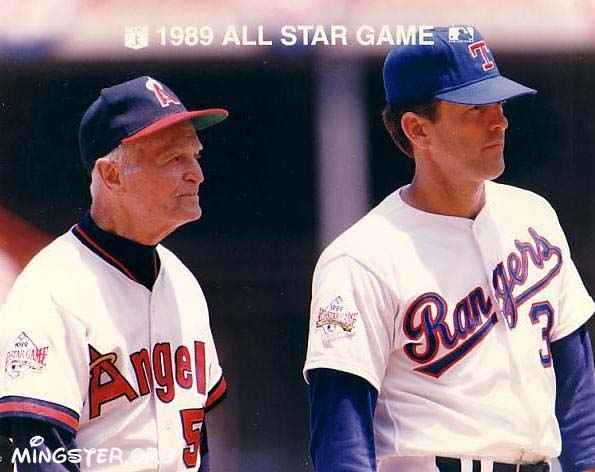
Nolan Ryan would be the next in 1992. His #30 in lone to the Angels, but he also has #34 hung up by both teams in Texas. It was 1973 when The Ryan Express was completely unmatched by any hitter who dug in. Two no-hitters and a major league record 383 strikeouts that season. Ryan would also throw a no-hitter in the following two marathons. In his eight seasons with the Halos, Ryan led the American League in strikeouts seven times before being traded to Houston in 1980. He would be inducted into the Hall Of Fame in 1999 with a 98.7% voting percentage. 56 consecutive games with a hit by DiMaggio might be untouched, but 7 career no-hitters by Ryan might be on the same level.

Jimmie Reese coached the Angels for 23 years and was considered the greatest fungo hitter in the game with a bat he used himself. Unfortunately he did not see his #50 get retired in 1995 after passing away just a year earlier. Before his coaching days, Reese played with the Los Angeles Angels in the Pacific Coast League from 1933-1936. In those first two years he hit over .300 and lead all second baseman in fielding percentage.

The last number to be retired was Jim Fegosi's #11. He made his major league debut in September of the Angels' inaugural season. Fegosi played 11 years with the Halos while making his first all-star game in 1964. He was the last player to retire from the original 1961 Angel roster when he left Pittsburg in 1978 to come manage his team, the Angels. He would manage the Angels for just over 3 years. Fegosi along with Autry, were the first faces of this franchise.


Friday, January 3, 2014

1 Million - Fact #3

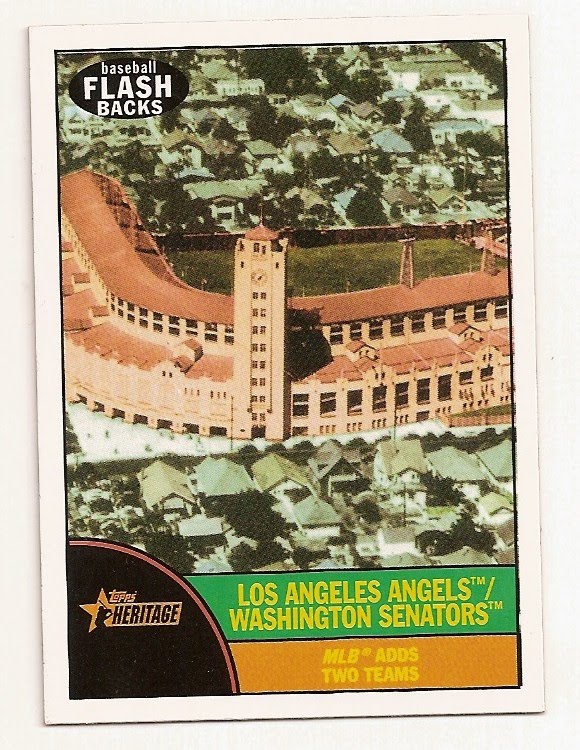
It was just the second year in franchise history when the Angels fan-base broke the one million mark in attendance. The year was 1962, and it was the first year the Angels would play their home games in Chavez Ravine. The Angels used Wrigley Field in Los Angeles for their inaugural season in 1961, but the old Spanish-style ballpark had a max capacity of 22,000 fans. Even the Dodgers looked at using Wrigley when they first moved from Brooklyn. However a 93,000 seated Coliseum was more enticing. Wrigley was owned by William Wrigley, the chewing gum king who owned the Cubs. Built in 1925, Wrigley Field in Los Angeles was the home of the Los Angeles Angels and the Hollywood Stars of the Pacific Coast League. Located in south central at 42nd Place and Avalon Blvd, just two miles from the Coliseum, Wrigley was given one special major league season in 1961 as a farewell to the old park. They averaged 7,500 fans a game which gave them just over 600,000 fans for the season.

Thursday, January 2, 2014

Fact #2: First Angels number retired

The first number retired by the Angels franchise was not for a player, but instead for the original owner, Gene Autry. The number that was retired for Gene was #26, because he was the "26th man" for the team. The number was retired in 1982. When Major League Baseball was expanding in 1960-61, he just wanted the broadcasting rights to the team. Instead he served as the owner for the Angels for 38 years until it was sold to Disney during his final years.

Wednesday, January 1, 2014

Jan 1, 2013 Fact

Dean Chance won the first Cy Young award in franchise history in 1964. Chance went 20-9 with a 1.65 ERA for the Halos. From 1962-1966 only pitchers from the Angels or Dodgers won the award (Drysdale '62 | Koufax '63, '65, '66). In 1967 the award would be given to a pitcher from the AL & NL for the first time since the award began in 1956.

Monday, November 4, 2013

Could be an awful offseason.

The Angels decided to bring back both Scioscia and Dipoto this upcoming season after hinting that one of them were going to be dismissed of their duties. Scioscia needed to come back as he is still one of the top managers in the league. Dipoto is still yet to do something positive for the organization. A very likeable guy, he does know the game very well. However, the signings of Pujols and Hamilton have not worked out. Although he is the general manager, it has been said that those moves had been made by the owner Arte Moreno. Despite those moves, Dipoto did go out and get Joe Blanton who had one of the worst seasons one could remember, Tommy Hanson for Jordan Walden which completely backfired, and also signed two great bullpen guys when injured and they never gave us a sniff at a possible comeback. It makes a fan pinch their eyes and rub their foreheads of how a team can fall off so quickly when being preseason World Series hopefuls two years in a row. Losing Greinke to the Dodgers after not paying him didn't help in this "we need pitchers" offseason.

Things are now only to get worse as the Angels have announced that Trumbo and Bourjos will be on the trading block for hopes of starting pitching, but in the contrary, the front office did not extend qualifying offer to left handed starter Jason Vargas. Mark Trumbo is a home grown talent who tore up AAA Salt Lake just a few years ago, and is now one of the top home run hitters in the American League. His defense has improved, but his discipline has not. When watching games and at-bats, you can tell he is guessing at pitches and will flail at almost anything. Even with that being said, he can still grow and learn and can give you 30/100 offensive numbers. Bourjos was out a majority of this past year with injuries, but again has the potential to be an offensive threat by putting the ball in play and motoring around the base paths. He flies around in the outfield, running down anything that doesn't get to the wall taking hits away in all parts on the grass. Again, another guy who came from within. If the Angels lose both these guys, it will be a huge dent, missing a major power bat, and rabbit on the diamond.

If the Angels are going after pitching, do what you need to do to get rid of Hanson and Blanton. This also means keeping Jason Vargas. A left handed pitcher who still has plenty of years left missed two months due to a blood clot in his armpit. A rare "injury" but had nothing to do with his actual pitching arm. Vargas has been able to go 200+ innings twice in his last three years. This past season with the arm pit injury, Vargas had 24 starts, going 7 innings or more in 10 of them and averaging 6.5K/9.

This will be an interesting offseason for the Halos. As we sit back and cringe awaiting the fate of the Angels trades, let us remember that Weaver and Trout will still be wearing red in Orange County this season.

Saturday, September 28, 2013

Ford C. Frick - Journalist, Commissioner, Fan

With Allen Huber “Bud” Selig announcing his plans to retire in January 2015, we can reminisce on the Seilg era, along with the other eight commissioners dating back to Judge Landis in 1921.  They have played an important role in America’s pastime, holding down the fort during mischief and mayhem. They dealt with gambling, civil rights, free agency, and drugs. One which stands out the most is the 1919 Black Sox scandal which gave baseball its first commissioner. The owners gave the key to baseball to Judge Landis who banned eight Chicago players from the game for life. A.B. “Happy” Chandler had the entrance of Jackie Robinson. Ford Frick split Maris and Ruth’s homerun record.  Kuhn was in office for free agency hearings in the US Supreme Court. Giamatti was around for the banning of Pete Rose. Finally, Selig had to handle the steroid era.  These gentlemen were men of law, military, and business. Asked to come in and run it as such. All except for one, Mr. Ford Christopher Frick.

Born just one month and 19 days before the Babe, Frick joined the New York sports writing team in 1922. He became a lifetime baseball employee when he started covering the Bambino in 1923. Just like the rest of America, Frick fell in love with the larger than life ballplayer. This was a time when Walter Hagen and Bobby Jones owned the golf world, Jack Dempsey was the great boxing champion, tennis had Tilden, Lenglen, and Wills, and Notre Dame Football had the four horsemen in the backfield.  Frick covered them all, but there was only one Ruth and he dominated the media. Baseball strategy prior to Ruth was “hit ‘em where they ain’t”, base stealing, and slashing led by Ty Cobb. The game changed because of Ruth and Frick covered it all from his Ruthian blasts to his boyish enthusiasm with fans and kids that never dimmed.

“Attempting to measure Babe Ruth’s greatness by standard rule, or mathematical formula, is like trying to thread a needle while wearing boxing gloves.” – Ford Frick

From the end of WWI until the great depression was considered the golden age of sports by most writers in that time. It was an era of laughter and excitement when America supposedly won the “war to end all wars.” For Frick it was an opportunity to cover sports as they grew internationally, but also to cover some of the greatest baseball players of all time. Of the first 108 players elected into the Hall of Fame, 52 of them played during the postwar decade. Names like: Dickey, Sisler, Gehrig, Foxx, Hornsby, Cronin, Cobb, Ruth, Speaker, and Combs; along with pitchers such as: Walter Johnson, Left Grove, Dazzy Vance, and Grover Alexander.

Judge Landis authorized the broadcasting of the World Series in 1921, which would change radio forever. The first broadcast was done by New York’s WEAF, however it would blow up in Chicago when Mr. Wrigley let all local stations broadcast Cubs games. Public interest in nearby states for the Cubs took off. WOR began broadcasting the same year Frick came to New York in 1922. The first two years of WOR, operation came out of Bamberger’s department store which sold radio sets to consumers. It wasn’t until 1924 that they had their own station. In 1930 Frick went from being a writer to becoming a broadcaster. The first local New York broadcast took place in 1931 when four local stations were invited to broadcast a game at Ebbets Field. Frick along with Ted Husing, Sid Loberfeld, and Graham McNamee sat in a box behind the plate and talked into microphones hooked up by telephone lines with one technician on hand that had the job of keeping the lines open. The fan mail poured in and the radio business would boom. Frick called the final regular season series between the Cardinals and Dodgers which decided the pennant. The Cardinals went onto win and that was as close as Dazzy Vance ever came to a world series, but it did attract a record listening audience. By the mid 1930’s, all sixteen teams were broadcasting their games. It opened up a source of income that television would soon quadruple.

1934 would be a big jump for Frick as he was elected Director of the National League Service Bureau at the beginning of the year, then National League President before Thanksgiving. What he is most known for during his time at the head of the National League is the working with hotel owner Stephen C. Clark in creating the National Baseball Museum in Cooperstown New York. Clark bought a ball for $5 in 1935 that was used by youngsters in games played at Phinney pasture during the mid 1800’s. The ball was found in a trunk, blackened, torn, patched with ancient letters on it. Clark mounted the ball and displayed it through the Otsego County Historical Society which then attracted local interest.  Clark then added his own prized baseballs, paintings, and prints. He would send his staff across the country to collect other baseball artifacts to add to the collection. Within a year, his small library became a place to travel. Although the Hall of Fame opened in 1939, the first induction class came in 1936. Babe Ruth, Walter Johnson, Christy Mathewson, Ty Cobb, and Honus Wagner were elected. 1939 means something even more because it celebrates the 100th anniversary of the “Myth” of Abner Doubleday creating the game of baseball in Cooperstown in 1839.

From celebratory to controversy, Frick would later have to face the dispute of the first black player coming into his league. Happy Chandler was commissioner of baseball; however Jackie was going to play for the Dodgers of the National League. It was not unexpected as Robinson was assigned to Montreal the year before. Branch Rickey was a man who did not act on impulse. The idea of integrating blacks in the majors goes all the way back to the mid 1930’s, but no one could ever pull the trigger. In 1947, Frick dealt with all problems big and small with Jackie Robinson. It started with spring training in the south, hotels and restaurants, and also opposing teams. The Cardinals, now one of the classiest organizations, was one of the toughest to deal with as they set out to protest their games against the Dodgers. Frick accepted the entrance of Robinson and other black players to follow. He would then go on to warn organizations of possible suspensions for those who chose to dispute.

“I  cannot but feel that the one man, above all others, who deserves the eternal thanks of his own race, and all thinking people, for bringing about baseball’s greatest reform, is Jackie Robinson himself…Certainly baseball people should be eternally grateful for the contribution he made to his own people, and to the game.” – Ford Frick

Brooklyn would bring up Roy Campanella and Don Newcombe the next year, both competitors and gentleman. Robinson was no longer a one man crusade, although he paved the way for other greats to come.
Happy Chandler would retire from being Major League Baseball’s commissioner in 1951, giving the reigns to Ford Frick who has been in the game since the early 1920’s as a journalist following the Sultan of Swat. The 50’s was all about the expansion west. There were meetings with the Pacific Coast League about turning the PCL into a third circuit and compete against the American and National Leagues which only went as far west as Chicago. This was immediately discouraged, however San Francisco and Los Angeles pledged ready to take on a major league team. The plan was to advance individual cities to major league status, expanding the geographic of the baseball, but keeping eight teams to each league. The Braves were the first to go in 1953, taking off for Milwaukee. Although Boston fans were bitter, they still had their Red Sox.  The following year the American League had two changes. The Philadelphia Athletics moved to Kansas City while the St. Louis Browns moved to Baltimore. The major leagues expanded from 10 to 13 cities. Things then got dicey in 1957 with two New York teams traveling across the country. The Dodgers went to Los Angeles and the Giants took to San Francisco. Fans were appalled and in uproar over this massive change. New York had become a one-club city.

Immediately after, the major leagues would expand to 10 teams each. New York, Houston, Los Angeles, and Minneapolis were selected. A territory rule would be stepped on with two teams playing in New York and two in Los Angeles. A long meeting with league leaders in St. Louis and with Frick as commissioner went back and forth until Mr. Ben Fiery of the American League proposed that no city could be shared between clubs if the city population is less than 4 million. After agreement, Yankees and Mets would share the Polo Grounds until Shea Stadium was built, and the Angels would temporarily use Wrigley Field in Los Angeles.

“Baseball has always been slow to accept change. Only through dire pressure can any radical change be accomplished. The move of the Giants and Dodgers from New York to California brought that pressure in abundance.” – Ford Frick

The last major historic event that took place while Frick was involved with baseball was the homerun race to catch Ruth’s 60 by Roger Maris during the same year of the expansion of two more teams in each league in 1961. Along with the expansion of the leagues was the extension of the season from 154 games to 162. On the 154th game of the season for the Yankees, Maris had 59 home runs. It wasn’t until September 26th when Maris his number 60 to tie Babe Ruth’s record. On October 1st, the last day of the season, Maris hit home run number 61 to break the record, but in 162 games. Frick would separate the two records, not giving full credit to Maris for having the new record. Some say it was because Frick was such a fan and good friend of Ruth’s he would have none of it. Players such as Roger Hornsby backed Frick comparing Ruth’s .356 average in 1927 and Maris’ .269 average in 1961. Either way, Frick did what he thought was right for the game.

“The commissioner is in a tough spot…He cannot flaunt national law. His decisions must be tempered to fit the times. He cannot roll in the mud of a labor argument one moment, and next moment don a clean shirt and assume authority as final judge and arbiter. As commanding general his job is to develop strategy to win the war, not to man the skirmish lines or lead a scouting patrol…The fact is the commissioner is a hardworking executive trying as best he can to weld scores of individual enterprises into a national institution for the purpose of providing honest competitive entertainment for a sports-minded public.” – Ford Frick

Ford Frick is the only commissioner to be built from within. He is a prominent figure in baseball history as he’s been at the forefront from radio beginnings to Astroturf.  The integrity of the game was held strong during his time in office as he paid tribute and respect to the past, but also was a pioneer in the movement and expansion of the game. No one else was as heavily involved in the revolution of baseball as Ford Frick. He was also a fan of the game, its players, and its followers.

Frick’s Players List
Happiest Player: Ernie Banks – His “nice day for a game” is a personal trademark
Most Aggressive Player: Ty Cobb – His every move was a challenge
Player with Greatest Fan Appeal: Babe Ruth – Undoubtedly
Greatest Pitching Performance: Don Larsen’s Perfect Game – vs Dodgers on October 8, 1956
Best World Series Performance: Brooks Robinson – Greatest individual exhibition I ever witnessed
Greatest World Series Thrill: Bill Mazeroski – 9th inning home run in 1960 game 7 World Series
Favorite “Bad Boy”: Frankie Frisch – I fined him and suspended him the most


*Credit for quotes: Frick, F. (1973). Games, astrisks, and people; memoirs of a lucky fan. New York, NY: Crown Publishers Inc.

Thursday, September 26, 2013

The Last Home Game...


A Wednesday afternoon that had weather in the mid 70's with partial clouds and a light breeze is a great excuse to be outside at a ballgame. With Weaver on the mound, and a spring training like attendance, it felt like a scrimmage that still meant something. Our cheap seats in section 426 became field level after telling the attendant that I just wanted to see my old seats where we had season tickets for 15 years. You can see my seats in this picture as they were on the opposite side of the stadium in section 113. It was a great white lie to sit up front one last time in 2013. As I looked out to the field, I saw no Trout, no Pujols, no Bourjos, no Kendrick, and Callaspo in a green uniform. Instead I saw Shuck, Cowgill, Calhoun, Green, and Romine. The only two constant Angels I saw were Weaver and Aybar. This reminded me of the teams Scioscia was successful with. Guys who were scraps in the system who played for eachother. Stealing bases, hitting behind guys, bunting, and beating out grounders.
After a solid first by Weav, Shuck led off the bottom of the 1st. I glanced at the scoreboard to see that his average was .291. A guy in his first full season in the bigs no taller than me was getting a chance because of an injured Borjous and in injured Pujols. Trumbo who is not a natural outfielder made the move back to first, moving Trout to center and giving Shuck the chance of a lifetime. He stepped up and produced all season, additionally making the catch of the year going over the wall next to the foul pole in left.

Aybar came up next and I started to think of how long Aybar has been with the Angels and I still think is one of the most underrated short stops, if not hidden gems in baseball. Bunts for hits, plays stellar defense, doesn't strike out, great arm, great feet, hits behind runners, etc. Hitting from the left side, his first two at-bats he took fastballs down the middle with the smooth approach of staying on the ball and hitting line drives to left center for knocks. As they say, "like poetry in motion" how easy he made it look. These two hits put Aybar in 2nd place in baseball this year with 47 multi-hit games. I hope they sign him to a 5-year deal when his contract is up.

Weaver continued to dominate. A natural fly ball pitcher who can hit his spots, deceive hitters, and change speeds would get mad at himself at every walk or hit he gave up. A true sign of a competitor even with the season basically over and the stands empty. As a big Weaver fan being a Long Beach State alum, I start thinking about the type of person he is. Simple, quiet, and friendly, Weaver draws the initials of the late Nick Adenhart in the back of the mound before he takes the rubber every inning. He has also named his newborn son Aden after him as a tribute. Additionally, Weaver being one of the top 5 pitchers in the AL took a pay cut to stay an Angel and so management could spend money elsewhere to help the team. His agent Scott Boras didn't even show up to his giant press conference in front of the home plate entrance. What a guy.

The three runs the Angels got came from moving runners over, stealing bases and putting pressure on the defense. Both innings the Angels scored in (4th & 5th) the A's had to play with the infield in. After Aybar stole 2nd, Calhoun worked a 3-2 count with 0 outs and pulled a grounder to second to put Aybar at third. Romine and Cowgill both had sacs. We all know Scioscia loves the "contact play" and it worked one out of the two times. Aybar's third hit of the game was a grounder up the middle for an RBI and the game clincher. Strategic offense and shut down pitching was baseball at its best and it was a great last game to watch live. 

My last thoughts were about the A's and how they consistantly make the playoffs with no All-Star names on their roster. But their guys just play baseball the right way. Hitters are patient, pitchers throw strikes, and each player brings a certain skill set to the team. Their lineup featured no one hitting over 300, but yet mostly guys in the .240s -.260s. Again, each guy played a roll. Reddick is a power bat who plays all out defense; a combo that is hard to find. With a runner on first and two outs Shuck hit one past the first baseman and tried to stretch it into a double. Reddick fired one in on the money to bang Shuck out and end a potential threat. Callaspo who was picked up from the Angels made a diving stop down the 3rd baseline with Hamilton on 2nd and threw out a runner to end another threat. This may not have the stars to bring in 40,000 people to see, but they play the game hard and buy into the team strategy.

As we conclude the 2013 season and wonder if Scioscia or Dipoto will be sent off, we also learn about the window of opportunity for Arte Moreno to take the team elsewhere, and the future of Mike Trout when he becomes a free agent in 2017. A lot of questions linger in the future. Will Pujols ever be healthy? Will Hamilton and Trumbo learn to layoff pitches outside the zone? The questions have never been bigger for the Angels because of the star power and expectations. It should make for a very interesting offseason.