 On the franchise's 40th anniversary, a team home run record was set. The 2000 Angels had four hitters who had 30+ home runs. Mo Vauhgn, Tim Salmon, Garret Anderson, and Troy Glaus combined for a season total of 236 long balls. Glaus was the team leader with 47 while the other three hung around the mid 30's. There were also four Angels with 100+ RBIs. Tim Salmon only had 97, which left a spot open for Darin Erstad who added 25 home runs to the mix. This powerful hitting team finished 9.5 games back of Oakland with a 82-80 record. Let it be noted that 7 of the 9 starters would be the starters on the World Series team just two years later. The all time team home run record for one season was done by the 1997 Seattle Mariners who hit 264. That team was lead by Griffey Jr, Edgar Martinez and Jay Buhner.
 Tuesday, January 14, 2014
Fact #9 - The Long Ball
On the franchise's 40th anniversary, a team home run record was set. The 2000 Angels had four hitters who had 30+ home runs. Mo Vauhgn, Tim Salmon, Garret Anderson, and Troy Glaus combined for a season total of 236 long balls. Glaus was the team leader with 47 while the other three hung around the mid 30's. There were also four Angels with 100+ RBIs. Tim Salmon only had 97, which left a spot open for Darin Erstad who added 25 home runs to the mix. This powerful hitting team finished 9.5 games back of Oakland with a 82-80 record. Let it be noted that 7 of the 9 starters would be the starters on the World Series team just two years later. The all time team home run record for one season was done by the 1997 Seattle Mariners who hit 264. That team was lead by Griffey Jr, Edgar Martinez and Jay Buhner. 
Thursday, January 9, 2014
Fact #8 - Win first division
 It took 19 years, but the Angels would finally win their first division championship in 1979. Jim Fregosi took over the Halos the previous year, but this would be his first full season as skipper. Don Baylor, Bobby Grich, Rod Carew, and Brian Downing led an offense that only had one starting player with a batting average under .280. Downing would hit .326 while Grich and Baylor both powered 30+ home runs. The pitching wasn't spectacular, but they got the job done. The staff was lead by 26 year-old Dave Frost and 32 year-old veteran Nolan Ryan who both threw over 200 innings. The Angels would fall to Earl Weaver's Orioles powered by Ken Singleton and Eddie Murray. It would be Weaver's final American League Championship.
Wednesday, January 8, 2014
Max Capacity - Fact #7
Before the 1982 season, the Angels acquired Bobby Boone and Reggie Jackson. Later, four Angels would participate in the All-Star game, three of them starting (Bobby Grich - 2B, Reggie Jackson - RF, Fred Lynn - CF, and Rod Carew). Jackson would have the only RBI for the American League when he hit a sac fly to drive in Ricky Henderson.
 The team would go on to win 93 games and the American League West.
64,406 came out to see game one
of the 1982 ALCS against the Milwaukee Brewers, which is the largest
home crowd in Angels history. The California Angels
went on to win the game 8-3, but would lose the series after going up
2-0 in a best of five. The current capacity of Angel Stadium is 45,483.
The team would go on to win 93 games and the American League West.
64,406 came out to see game one
of the 1982 ALCS against the Milwaukee Brewers, which is the largest
home crowd in Angels history. The California Angels
went on to win the game 8-3, but would lose the series after going up
2-0 in a best of five. The current capacity of Angel Stadium is 45,483.

Tuesday, January 7, 2014
Angels Fact #6 - RBI duo
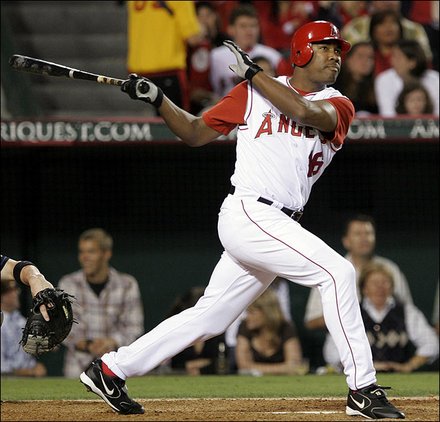
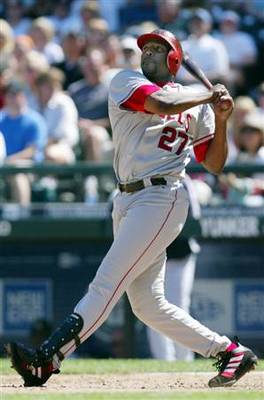
There are two players in the Angels franchise history who have posted four consecutive seasons of 100+ RBIs. What makes it even more interesting is one picked up his streak where the other left off. The greatest offensive player in Angel history, Garret Anderson did it from 2000-2003. It was the only four years in his career he had over 100 RBIs. Of course one of those was 2002 which helped propel the Angels to their only World Series championship. He is still currently the Angels all-time leader in hits, doubles, runs, and RBIs. He played 15 of his 17 years with the Halos.
 The first four of his six years from 2004-2007, Vladimir Guerrero was an RBI machine, no matter where the ball was pitched. Guerrero won the American League MVP in his first season in the big A when he had 39 home runs and 125 RBIs. Guerrero also won the Silver Slugger all four of those seasons. He became a great show for fans everywhere, especially those who came to watch batting practice before games.

Monday, January 6, 2014
1 Million pt2 - Fact 5
Since 1975, the seasonal attendance at Angels games has never dropped below one million fans. That season the Angels averaged just over 13,000 fans per game which was just a notch below the major league average. Just four years later, they would more than double that number with 31,000 fans per a game putting them over two million for the season, the first time in franchise history. The 1979 roster included Nolan Ryan, Frank Tanana, Brian Downing, Rod Carew, Bobby Grich, and Don Baylor. The Halos finished 88-74 winning the AL West. They would fall to Baltimore in the ALCS 3-1.


Saturday, January 4, 2014
Immortal Angels - Fact #4
There are 5 numbers that the Angels have retired. At Angels Stadium 6 numbers hang with the addition of Jackie Robinson's #42. From a past post, we have learned that owner Gene Autry had #26 retired first in 1982. The next two were players who also have their numbers retired elsewhere. Rod Carew's #29 was retired in 1986. His number is also retired by the Minnesota Twins. He played 7 years with the Angels while playing 12 in Minnesota. The 18-time all-star won 7 batting titles and many other awards including the 1977 AL MVP. Over 3,000 hits and a .328 career average got him into the Hall Of Fame with over 90% voting in 1991.

Nolan Ryan would be the next in 1992. His #30 in lone to the Angels, but he also has #34 hung up by both teams in Texas. It was 1973 when The Ryan Express was completely unmatched by any hitter who dug in. Two no-hitters and a major league record 383 strikeouts that season. Ryan would also throw a no-hitter in the following two marathons. In his eight seasons with the Halos, Ryan led the American League in strikeouts seven times before being traded to Houston in 1980. He would be inducted into the Hall Of Fame in 1999 with a 98.7% voting percentage. 56 consecutive games with a hit by DiMaggio might be untouched, but 7 career no-hitters by Ryan might be on the same level.

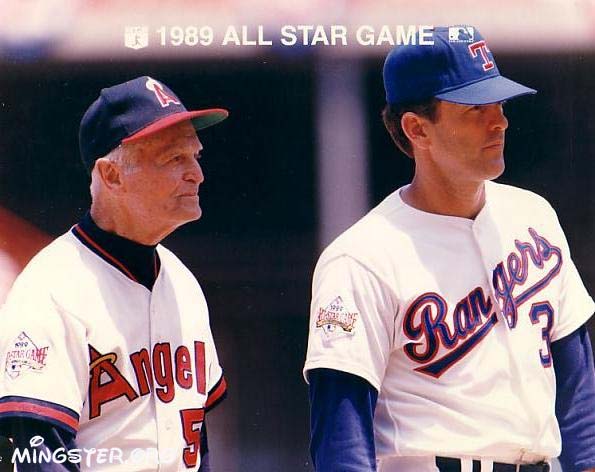
Jimmie Reese coached the Angels for 23 years and was considered the greatest fungo hitter in the game with a bat he used himself. Unfortunately he did not see his #50 get retired in 1995 after passing away just a year earlier. Before his coaching days, Reese played with the Los Angeles Angels in the Pacific Coast League from 1933-1936. In those first two years he hit over .300 and lead all second baseman in fielding percentage.

The last number to be retired was Jim Fegosi's #11. He made his major league debut in September of the Angels' inaugural season. Fegosi played 11 years with the Halos while making his first all-star game in 1964. He was the last player to retire from the original 1961 Angel roster when he left Pittsburg in 1978 to come manage his team, the Angels. He would manage the Angels for just over 3 years. Fegosi along with Autry, were the first faces of this franchise.

Nolan Ryan would be the next in 1992. His #30 in lone to the Angels, but he also has #34 hung up by both teams in Texas. It was 1973 when The Ryan Express was completely unmatched by any hitter who dug in. Two no-hitters and a major league record 383 strikeouts that season. Ryan would also throw a no-hitter in the following two marathons. In his eight seasons with the Halos, Ryan led the American League in strikeouts seven times before being traded to Houston in 1980. He would be inducted into the Hall Of Fame in 1999 with a 98.7% voting percentage. 56 consecutive games with a hit by DiMaggio might be untouched, but 7 career no-hitters by Ryan might be on the same level.
Jimmie Reese coached the Angels for 23 years and was considered the greatest fungo hitter in the game with a bat he used himself. Unfortunately he did not see his #50 get retired in 1995 after passing away just a year earlier. Before his coaching days, Reese played with the Los Angeles Angels in the Pacific Coast League from 1933-1936. In those first two years he hit over .300 and lead all second baseman in fielding percentage.

The last number to be retired was Jim Fegosi's #11. He made his major league debut in September of the Angels' inaugural season. Fegosi played 11 years with the Halos while making his first all-star game in 1964. He was the last player to retire from the original 1961 Angel roster when he left Pittsburg in 1978 to come manage his team, the Angels. He would manage the Angels for just over 3 years. Fegosi along with Autry, were the first faces of this franchise.
Friday, January 3, 2014
1 Million - Fact #3
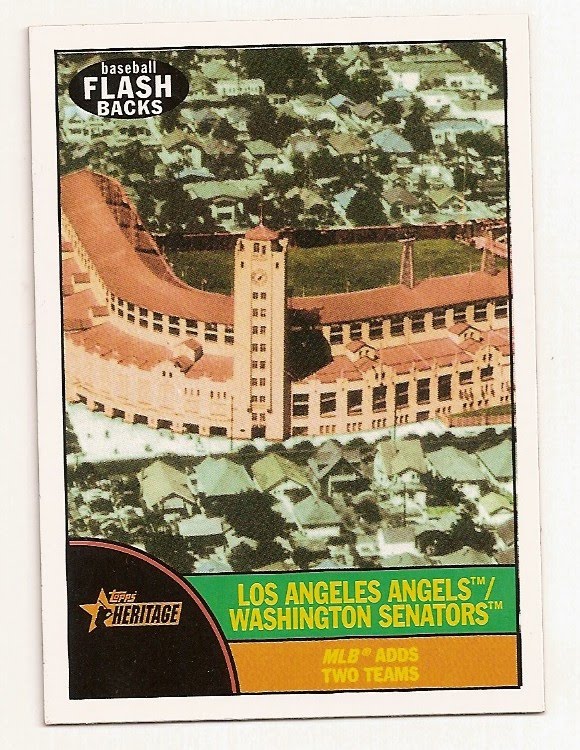
It was just the second year in franchise history when the Angels fan-base broke the one million mark in attendance. The year was 1962, and it was the first year the Angels would play their home games in Chavez Ravine. The Angels used Wrigley Field in Los Angeles for their inaugural season in 1961, but the old Spanish-style ballpark had a max capacity of 22,000 fans. Even the Dodgers looked at using Wrigley when they first moved from Brooklyn. However a 93,000 seated Coliseum was more enticing. Wrigley was owned by William Wrigley, the chewing gum king who owned the Cubs. Built in 1925, Wrigley Field in Los Angeles was the home of the Los Angeles Angels and the Hollywood Stars of the Pacific Coast League. Located in south central at 42nd Place and Avalon Blvd, just two miles from the Coliseum, Wrigley was given one special major league season in 1961 as a farewell to the old park. They averaged 7,500 fans a game which gave them just over 600,000 fans for the season.

Subscribe to:
Posts (Atom)